Posted By : Admin on 31-07-2026
GasVigil provides Single Gas Detection Systems in Hyderabad for organizations that need focused monitoring of a particular gas in their workplace. Gas detection is an important consideration in environments where leakage, accumulation, or exposure to hazardous gases may create safety concerns. A suitable detector can provide an early warning when gas concentrations reach configured alarm levels, allowing personnel to follow established safety procedures.
A single gas detector is designed to monitor one specified gas rather than several gases simultaneously. This focused approach can be useful when a facility has already identified a particular atmospheric hazard through its workplace risk assessment. Choosing the right equipment requires consideration of the target gas, expected concentration, sensor technology, operating environment, detection range, and intended monitoring method.
The primary purpose of a Single Gas Detection System in Hyderabad is to continuously or periodically monitor a selected gas and provide an indication when its concentration reaches a specified threshold. Depending on the equipment, warnings may be communicated through a display, audible alarm, visual signal, vibration, or other available alert mechanisms.
A Single Gas Detector generally combines a gas-specific sensor with electronic processing and an alarm interface. The sensor responds to the target gas, while the instrument interprets the sensor output and provides information to the user.
Different gases require different sensing technologies and operating ranges. Therefore, a detector designed for one gas should not automatically be assumed to be suitable for another. Businesses should identify the target gas and review the manufacturer's specifications before selecting equipment.
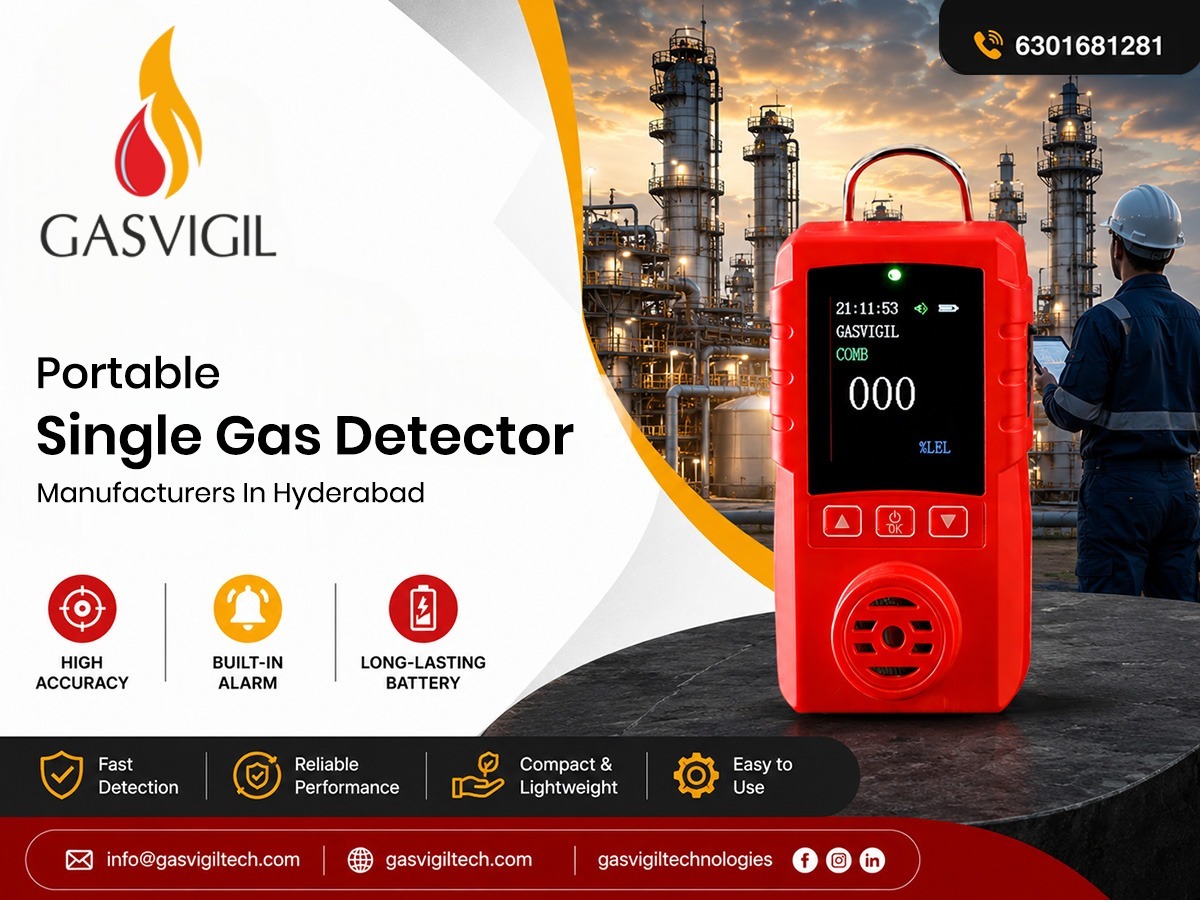
Depending on the model, single gas detection equipment may include a digital gas reading, audible alarm, visual warning indicators, vibration alerts, battery status information, compact housing, simple controls, and sensor condition monitoring.
Advanced models may provide additional functions such as event records, data logging, calibration reminders, configurable alarm settings, and communication options. Features vary between products, so organizations should select equipment based on the functions required for their application rather than relying on general detector descriptions.
A dedicated detector can provide focused awareness of a known gas hazard. When the target gas reaches the equipment's configured alarm level, the warning function can alert personnel so they can respond according to their workplace safety procedures.
Portable detectors can also provide flexibility for workers who need to move between different areas. By carrying a suitable detector, maintenance and inspection personnel can monitor the identified gas during appropriate activities instead of relying only on monitoring at a fixed location.
An Industrial Single Gas Detection System in Hyderabad can be considered for manufacturing plants, chemical processing areas, utility sections, storage locations, maintenance zones, and other industrial environments where a particular gas may be present.
Industrial applications may involve tanks, pipelines, processing equipment, enclosed spaces, or other areas where gas accumulation is possible. The detection system should be selected according to the target gas, concentration range, environmental conditions, required response time, and whether portable or fixed monitoring is needed.
A Commercial Single Gas Detection System in Hyderabad can be used in suitable commercial environments where a specific gas hazard has been identified. Potential applications may include commercial kitchens, laboratories, utility rooms, storage areas, service spaces, and maintenance zones.
Commercial facilities should identify the specific gas risk before selecting equipment. The detector's sensor type, detection range, alarm configuration, environmental suitability, and maintenance requirements should be considered to ensure that the equipment matches the intended application.
A Handheld Gas Detection System in Hyderabad provides portable monitoring for personnel working across different locations. It can be useful for technicians, maintenance teams, inspectors, service engineers, and workers performing tasks in areas where atmospheric gas conditions need to be checked.
The portability of handheld equipment makes it suitable for changing work locations and inspection activities. Before deployment, users should verify battery status, sensor condition, calibration status, alarm settings, and equipment limitations according to the manufacturer's instructions.
Businesses looking for Gas Detection Equipment Manufacturers in Hyderabad should evaluate equipment based on its suitability for the identified hazard. Important considerations include sensor technology, target gas, detection range, alarm levels, environmental protection, power source, portability, calibration requirements, and available technical support.
A gas detection program involves more than purchasing a detector. Equipment should be properly maintained, periodically tested and calibrated, and operated by personnel who understand its functions and limitations. These practices help support consistent monitoring performance.
The technical specifications of a Single Gas Detector in Hyderabad vary according to the target gas and model. Common parameters can include sensor type, measurement range, resolution, alarm thresholds, response time, operating temperature, humidity range, battery runtime, display type, alarm indicators, dimensions, and weight.
For handheld equipment, battery capacity, charging method, ingress protection, calibration interval, data logging, and portability can also be important. Users should verify the exact product specifications before choosing equipment for a particular workplace.
The sensor is one of the most important components of gas detection equipment because it determines how the instrument responds to the target gas. Sensor technology should be appropriate for the gas being monitored and the expected concentration range.
The detector housing and other components should also be suitable for the intended operating environment. Construction materials, controls, display, alarm components, battery system, and protective features should be evaluated according to workplace conditions. Proper calibration and maintenance remain essential for maintaining the intended detection performance.
Single Gas Detection Systems can be used across many industries where a specific gas hazard has been identified. Suitable applications may include manufacturing facilities, chemical industries, laboratories, oil and gas operations, wastewater treatment areas, utility spaces, confined-space work, storage facilities, commercial kitchens, and maintenance activities.
Portable gas detectors can support personnel during inspection and service work, while fixed detection arrangements may be considered for locations requiring continuous monitoring. The appropriate approach depends on the site's hazard assessment and monitoring requirements.
A single gas detector focuses on one target gas, making it appropriate for locations where one particular atmospheric hazard is the primary concern. A Multi Gas Detector is designed to monitor multiple gases simultaneously and may be more suitable when several atmospheric hazards can occur together.
The choice should be based on the workplace risk assessment rather than simply choosing one type over the other. Identifying the gases that may be present, the expected concentrations, and the required monitoring method can help determine the appropriate equipment.
The selection process should begin by identifying the target gas and understanding the potential exposure scenario. The required detection range, alarm levels, sensor technology, and environmental conditions should then be evaluated.
Businesses should also decide whether they require a handheld, personal, portable, or fixed monitoring arrangement. Battery life, operating temperature, humidity, enclosure protection, calibration requirements, maintenance support, and user training should be considered before final selection.
GasVigil provides Single Gas Detection Systems in Hyderabad for industrial, commercial, maintenance, and workplace monitoring applications. The company offers gas detection solutions that can be evaluated according to the type of gas, detection requirements, operating environment, and preferred monitoring method.
Customers can consider important factors such as sensor type, detection range, alarm functions, portability, battery requirements, calibration needs, and equipment maintenance. Selecting the detector according to the identified hazard can help create a more suitable gas monitoring solution.
A Single Gas Detection System is designed to detect and monitor one specified gas. Depending on the model, it can provide readings and alerts when the gas reaches configured concentration levels.
A single gas detector can be appropriate when a facility has identified one specific gas as the primary hazard. A multi-gas detector is more suitable when several gases need to be monitored simultaneously.
Check the target gas, sensor technology, detection range, alarm settings, response time, operating environment, battery requirements, portability, calibration needs, and maintenance requirements before selecting a detector.
Focused gas monitoring can provide valuable information in workplaces where a particular gas presents a potential hazard. Single Gas Detection Systems in Hyderabad can support industrial, commercial, maintenance, inspection, and other appropriate applications where targeted gas monitoring is required.
GasVigil provides single gas detection solutions for different monitoring needs. By identifying the target gas and evaluating sensor technology, detection range, alarm requirements, environmental conditions, portability, and maintenance needs, businesses can select equipment that is appropriate for their specific gas monitoring application.