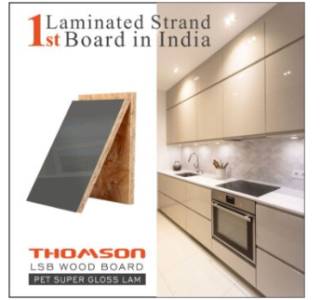
Laminated OSB (LSB) Board

      Description


      Laminated Oriented Strand Board (LSB): Strength, Stability, and Versatility

      Laminated Oriented Strand Board (LSB), also known as LVL-OSB, represents a significant advancement in engineered wood products. Combining the strength and stability of laminated veneer lumber (LVL) with the cost-effectiveness and versatility of oriented strand board (OSB), LSB offers a superior solution for a wide range of structural and non-structural applications.

      Key Features & Benefits:

      • Exceptional Strength: LSB boasts significantly higher strength properties compared to standard OSB, exhibiting superior bending strength, stiffness, and tensile strength. This makes it ideal for applications requiring high load-bearing capacity.
      • Enhanced Stability: The lamination process minimizes dimensional changes due to moisture fluctuations, resulting in exceptional stability and reduced warping or bowing. This translates to longer-lasting structures and improved performance in various climates.
      • Consistent Quality: Unlike traditional OSB, LSB undergoes a precise manufacturing process that ensures consistent quality and performance across every board. This minimizes variations in strength and reduces the risk of defects.
      • Cost-Effective Solution: While offering superior performance, LSB remains a cost-effective alternative to solid lumber and other engineered wood products, making it a practical choice for various budgets.
      • Versatile Applications: LSB's versatility extends to a wide range of applications, including:
        • Structural components: Roof sheathing, wall sheathing, floor decking, I-joists, beams, and trusses.
        • Non-structural applications: Furniture manufacturing, shelving, pallets, and various construction components.
        • Industrial uses: Formwork, packaging, and other applications requiring high strength and durability.
      • Environmentally Friendly: LSB is often manufactured using sustainably sourced wood materials, contributing to responsible forest management practices. Its durability also reduces the need for frequent replacements, further minimizing environmental impact.
      • Easy to Work With: LSB can be easily cut, nailed, screwed, and fastened using standard woodworking tools, simplifying installation and construction processes.
      • Improved Fire Resistance: Certain LSB formulations offer enhanced fire resistance compared to standard OSB, contributing to improved building safety.

      Specifications (Typical – may vary by manufacturer):

      • Sizes: Available in various standard sizes (length, width, and thickness) to suit different project needs. Contact your supplier for specific sizing options.
      • Grades: Different grades are available, each offering specific strength and performance characteristics. Consult the manufacturer's data sheets for detailed grade information.
      • Moisture Content: LSB is typically manufactured with a controlled moisture content for enhanced stability and performance.
      • Density: Higher density contributes to improved strength and stability.

      Applications:

      LSB is particularly well-suited for:

      • High-performance residential construction: Offering superior strength and stability for roofs, walls, and floors in demanding environments.
      • Commercial construction: Providing reliable performance for larger-scale projects requiring high load-bearing capacity.
      • Industrial applications: Supporting heavy loads and providing durability in demanding industrial settings.

      Note: Always consult the manufacturer's specifications and recommendations for proper handling, installation, and application guidelines to ensure optimal performance and longevity. Proper fastening techniques are crucial for achieving maximum strength and stability.

      Tags: Laminated OSB (LSB) Board