Description
Crowns and Bridges: Restoring Your Smile, Function, and Confidence
Missing or severely damaged teeth can impact more than just your appearance; they can affect your ability to chew, speak clearly, and even influence the health and alignment of your remaining teeth. At [Your Clinic Name/Practice Name - optional], we offer high-quality dental crowns and bridges – time-tested, durable, and aesthetically pleasing solutions designed to restore the strength, function, and beauty of your smile.
What Are Dental Crowns?
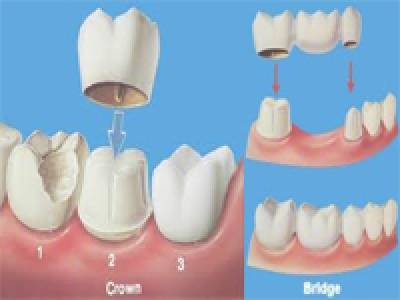
Often referred to as a "cap," a dental crown is a custom-made restoration that completely covers a damaged or weakened tooth above the gum line. It is meticulously crafted to match the shape, size, strength, and appearance of your natural teeth, providing robust protection and a seamless look.
Why You Might Need a Dental Crown:
- Protect a weak tooth from fracturing or hold together parts of a cracked tooth.
- Restore a tooth that is already broken or severely worn down.
- Cover and support a tooth with a large filling when there isn't much tooth structure remaining.
- Cover severely discolored or misshapen teeth for cosmetic improvement.
- Cover a dental implant.
- Hold a dental bridge in place.
- After a root canal procedure to protect the treated tooth.
Benefits of Dental Crowns:
- Enhanced Aesthetics: Restore the natural beauty of your smile with crowns that perfectly match your existing teeth.
- Improved Function: Regain full chewing ability and bite strength.
- Protection: Shield weakened teeth from further damage or decay.
- Durability: Designed to withstand daily wear and tear for many years with proper care.
- Long-lasting Solution: A reliable and stable restoration for damaged teeth.
Materials Used for Dental Crowns:
Crowns are crafted from various materials, each offering unique advantages:
- Porcelain/Ceramic: Highly aesthetic, ideal for front teeth, and excellent for patients with metal allergies. They are tooth-colored and mimic natural tooth translucency.
- Zirconia: An incredibly strong, durable, and biocompatible ceramic material. It offers excellent aesthetics and is highly resistant to fracture, making it suitable for both front and back teeth.
- Porcelain-Fused-to-Metal (PFM): Offers a strong bond between the porcelain and metal, providing both strength and a natural-looking exterior. The metal base provides durability, while the porcelain provides aesthetics.
- Gold Alloys: Highly biocompatible and very strong, gold crowns are gentle on opposing teeth and rarely chip or fracture. They are often chosen for back teeth where strength is paramount.
What Are Dental Bridges?
A dental bridge is a fixed prosthetic device designed to "bridge" the gap created by one or more missing teeth. It consists of two or more crowns for the teeth on either side of the gap (abutment teeth) – or dental implants – and a false tooth/teeth (pontics) in between. Bridges are custom-made to blend seamlessly with your natural teeth.
Why You Might Need a Dental Bridge:
- Replace one or more missing teeth.
- Prevent remaining teeth from shifting into the empty space, which can lead to bite problems and jaw issues.
- Restore your chewing ability and speech.
- Maintain the shape of your face by preventing the collapse of facial structures that can occur with missing teeth.
- Improve the aesthetics of your smile.
Benefits of Dental Bridges:
- Restored Chewing Ability: Enjoy a full diet without restrictions.
- Clearer Speech: Correct any speech impediments caused by missing teeth.
- Maintained Facial Structure: Preserve the natural contours of your face.
- Prevention of Tooth Shifting: Keep your remaining teeth in their proper positions.
- A Natural-Looking Solution: Custom-designed to match your existing teeth for a beautiful, complete smile.
Types of Dental Bridges:
- Traditional Bridges: The most common type, involving crowns placed on the natural teeth adjacent to the gap, with a pontic (false tooth) suspended between them.
- Cantilever Bridges: Used when there are only natural teeth on one side of the missing tooth. Less common now due to potential for leverage issues.
- Maryland Bonded Bridges: Consist of a pontic with "wings" on each side that are bonded to the inside surface of the adjacent natural teeth. These are more conservative as they require minimal tooth preparation.
- Implant-Supported Bridges: For multiple missing teeth, a bridge can be supported by dental implants rather than natural teeth, offering superior stability and bone preservation.
The Restoration Process (Generally)
The placement of a crown or bridge typically involves two or more appointments:
- Consultation & Examination: We begin with a thorough examination, X-rays, and a discussion of your dental history and goals to determine if a crown or bridge is the right solution for you.
- Tooth Preparation: For crowns, the tooth is shaped to allow the crown to fit over it. For bridges, the abutment teeth on either side of the gap are prepared.
- Impressions: Highly accurate impressions (digital or traditional) of your prepared teeth are taken. These impressions are sent to a dental lab where your custom crown or bridge will be meticulously fabricated.
- Temporary Restoration: While your permanent restoration is being made, a temporary crown or bridge will be placed to protect your prepared teeth and maintain aesthetics.
- Permanent Placement: Once your custom crown or bridge arrives from the lab, we will ensure a perfect fit, check your bite, and then permanently bond it into place.
Caring for Your Crowns & Bridges
With proper care, your dental crowns and bridges can last for 10-15 years, or even longer!
- Maintain excellent oral hygiene: Brush twice daily and floss daily, paying special attention to the areas around your crown or bridge.
- Use interdental cleaners: Specialized brushes or water flossers can help clean under bridges.
- Avoid chewing hard foods: Steer clear of ice, hard candies, or other extremely hard items that could chip or break your restoration.
- Regular dental check-ups and cleanings: Continue to visit us for routine examinations to ensure the health of your restoration and surrounding teeth and gums.
Invest in Your Oral Health
Choosing to restore your smile with crowns or bridges is an investment in your overall health and well-being. At [Your Clinic Name], we combine expert craftsmanship with state-of-the-art materials and techniques to deliver durable, beautiful, and functional results. Our goal is to provide you with a comfortable experience and a smile you'll be proud to show off.
Ready to Restore Your Smile?
If you're experiencing dental damage or missing teeth, we invite you to schedule a consultation with our experienced team. We'll discuss your options and help you choose the best solution to achieve a healthy, confident, and complete smile.
[Call to Action: Call us today at (XXX) XXX-XXXX or visit our website to book your appointment!]