Description
Frenectomy: Releasing Oral Restrictions for Enhanced Health & Function
Is a small band of tissue causing big problems with your speech, feeding, or oral comfort? A frenectomy is a safe, effective, and minimally invasive procedure designed to alleviate these restrictions, significantly improving your quality of life.
What is a Frenectomy?
A frenum (plural: frena) is a small fold of tissue that connects two parts of the body. In the oral cavity, two types commonly cause issues:
- Lingual Frenum: Located under the tongue, connecting it to the floor of the mouth. An overly short or tight lingual frenum is known as "tongue-tie" (ankyloglossia).
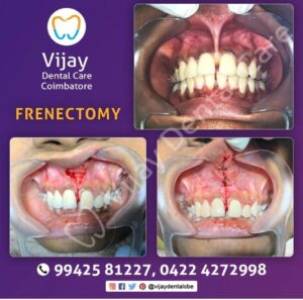
- Labial Frenum: Located behind the upper or lower lip, connecting it to the gum line. A prominent labial frenum can contribute to a gap between front teeth (diastema) or gum recession.
A frenectomy precisely releases or reshapes this restrictive tissue, allowing for improved mobility and function.
Key Benefits of a Frenectomy:
Opting for a frenectomy can offer a multitude of life-changing benefits, including:
- Enhanced Breastfeeding: For infants, a lingual frenectomy (tongue-tie release) can significantly improve latch, reduce pain for the mother, and promote adequate milk intake and weight gain.
- Improved Speech Clarity: In children and adults, releasing a tight lingual frenum can allow for better tongue movement, leading to clearer articulation and pronunciation.
- Better Oral Hygiene: Increased tongue and lip mobility can make it easier to clean teeth and gums, reducing the risk of plaque buildup and gum disease.
- Reduced Gum Recession Risk: A high labial frenum pulling on the gum line can contribute to gum recession. Its release helps protect gum health.
- Correction of Diastema: For some, a prominent labial frenum can prevent the two front teeth from coming together, creating a gap. A frenectomy can facilitate orthodontic closure of this gap.
- Increased Comfort & Function: Alleviates discomfort or tension caused by restricted movement, improving overall oral comfort, swallowing, and even the fit of dentures.
Who is a Frenectomy For? (Indications):
This procedure is recommended for individuals experiencing the following conditions:
- Infants with Breastfeeding Difficulties: Poor latch, clicking sounds during feeding, prolonged feeding times, or inadequate weight gain.
- Children with Speech Impediments: Difficulty pronouncing certain sounds (e.g., 'r', 'l', 's', 'th', 'ch', 'sh'), often associated with restricted tongue movement.
- Orthodontic Patients: To facilitate the closing of a midline diastema between the front teeth, or to prevent relapse after orthodontic treatment.
- Individuals with Gum Recession: When a frenum is pulling on the gum tissue, leading to exposed tooth roots.
- Adults Requiring Dentures: A prominent frenum can interfere with the proper fit and retention of full or partial dentures.
- Anyone Experiencing Oral Discomfort: Persistent tension, pain, or limited movement of the tongue or lips.
The Procedure: What to Expect
Performed in our comfortable office setting, a frenectomy is typically a quick and minimally invasive procedure:
- Consultation: We'll assess your specific condition, discuss your symptoms, and determine the most appropriate course of action.
- Anesthesia: A local anesthetic is administered to ensure comfort throughout the procedure. For infants, a topical numbing agent is often sufficient, sometimes followed by a small amount of local anesthetic.
- Precision Release: Using either a traditional surgical method or, more commonly, advanced laser technology (such as CO2 or diode lasers), the frenum is precisely released.
- Laser Advantage: Laser frenectomies often result in less bleeding, reduced post-operative discomfort, faster healing, and a lower risk of infection compared to traditional methods. The laser also cauterizes as it cuts, minimizing the need for sutures in many cases.
- Duration: The procedure typically takes only a few minutes.
Recovery & Aftercare:
Recovery from a frenectomy is generally swift and straightforward:
- Immediate Aftercare: Mild discomfort or soreness at the site is common and easily managed with over-the-counter pain relievers.
- Diet: A soft diet is recommended for the first few days to avoid irritation of the healing area.
- Healing: The surgical site typically heals within 1-2 weeks, often presenting as a diamond-shaped wound that closes naturally.
- Stretching Exercises: We will provide specific post-operative stretching exercises, especially for lingual frenectomies, to prevent reattachment and ensure optimal mobility and function. Adherence to these exercises is crucial for long-term success.
- Follow-Up: A follow-up appointment will be scheduled to monitor healing and ensure proper function.
Why Choose Us for Your Frenectomy?
At [Your Clinic Name], we combine expertise with compassionate care and cutting-edge technology to ensure the best possible outcomes for our patients. Our team is dedicated to making your frenectomy experience as comfortable and effective as possible, utilizing advanced laser techniques for a smoother procedure and faster recovery.
Ready to experience the freedom and comfort a frenectomy can provide?
Contact us today to schedule a consultation and discuss if a frenectomy is the right solution for you or your loved one.
Disclaimer: This product description is for informational purposes only and does not constitute medical advice. Please consult with a qualified healthcare professional to determine if a frenectomy is appropriate for your specific condition.