Description
Renew Your Smile: Comprehensive Crowns & Bridges Treatment
Restore the strength, function, and beauty of your teeth with our advanced Dental Crowns and Bridges treatments. Whether you're dealing with damaged teeth, significant decay, or missing teeth, these fixed prosthetic solutions offer a durable, natural-looking way to bring back your confident smile and oral health.
What Are Dental Crowns?
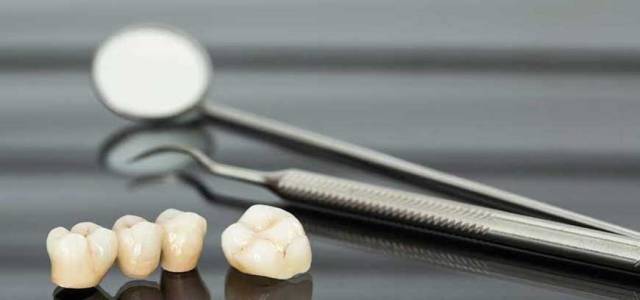
A dental crown, often referred to as a "cap," is a custom-made restoration that completely covers a damaged or weakened tooth above the gum line. It's designed to restore the tooth's original shape, size, strength, and appearance.
When are Dental Crowns Recommended?
- Protect a weak tooth from fracturing or hold together parts of a cracked tooth.
- Restore an already broken tooth or a tooth severely worn down.
- Cover and support a tooth with a large filling when there isn't much tooth left.
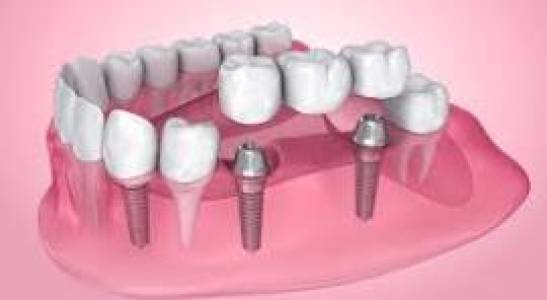
- Cover a dental implant.
- Make a cosmetic modification (e.g., to cover discolored or poorly shaped teeth).
- Cover a tooth after a root canal procedure.
What Are Dental Bridges?
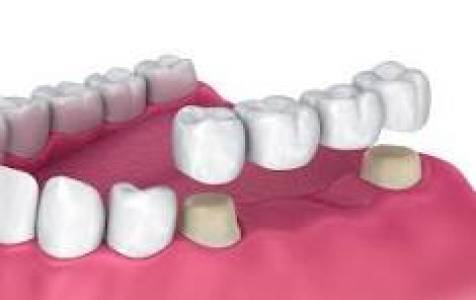
A dental bridge is a fixed dental prosthesis used to "bridge" the gap created by one or more missing teeth. It typically consists of two or more crowns for the teeth on either side of the gap (abutment teeth) and a false tooth/teeth (pontics) in between.
When are Dental Bridges Recommended?
- Replace one or more missing teeth.
- Prevent remaining teeth from shifting into the empty space, which can lead to bite problems and jaw issues.
- Restore your chewing and speaking ability.
- Maintain your facial shape and prevent bone loss in the jaw.
- Improve your smile's aesthetics.
Key Benefits of Crowns & Bridges
- Restored Functionality: Enjoy comfortable eating and speaking without limitations.
- Enhanced Aesthetics: Custom-matched to your natural teeth, they blend seamlessly for a beautiful, natural-looking smile.
- Durability & Longevity: Made from strong, high-quality materials, designed to last for many years with proper care.
- Improved Oral Health: Crowns protect weakened teeth, while bridges prevent shifting of adjacent teeth and maintain bite alignment.
- Boosted Confidence: A complete, healthy smile can significantly improve your self-esteem and quality of life.
- Fixed Solution: Unlike removable dentures, crowns and bridges are permanently cemented in place, offering stability and convenience.
The Treatment Process: What to Expect
The journey to your renewed smile typically involves a few appointments:
- Comprehensive Examination & Planning:
- Our dentist will conduct a thorough examination, including X-rays and potentially 3D scans, to assess your oral health and determine if crowns or bridges are the right solution for you.
- We'll discuss your goals, material options, and create a personalized treatment plan.
- Tooth Preparation:
- The tooth (or teeth) receiving the crown or supporting the bridge will be carefully prepared. This involves reshaping the tooth structure to ensure the crown or bridge fits perfectly.
- If there's significant decay or damage, this will be addressed first.
- Impressions & Temporary Restoration:
- Accurate impressions (either traditional putty or digital scans) of your prepared teeth and surrounding teeth will be taken. These impressions are sent to a dental laboratory where your custom crown or bridge will be fabricated.
- A temporary crown or bridge will be placed to protect the prepared teeth and maintain aesthetics while your permanent restoration is being made.
- Custom Fabrication:
- Skilled dental technicians in the lab will meticulously craft your crown or bridge using the chosen materials, matching the shade, shape, and size to blend flawlessly with your natural teeth. This process typically takes 1-2 weeks.
- Final Placement:
- Once your permanent crown or bridge is ready, you'll return for your final appointment. The temporary restoration will be removed, and the new crown or bridge will be carefully fitted and checked for proper bite and aesthetics.
- Once you and the dentist are satisfied, the restoration will be permanently cemented into place.
- Follow-up & Care Instructions:
- We'll provide detailed instructions on how to care for your new crown or bridge to ensure its longevity and maintain optimal oral hygiene.
Materials Used for Crowns & Bridges
The choice of material depends on factors such as strength requirements, aesthetic goals, and budget. Common options include:
- Porcelain / Ceramic:
- Pros: Highly aesthetic, excellent translucency, natural appearance, metal-free.
- Cons: Can be more brittle than metal, may wear opposing natural teeth if not polished properly.
- Ideal for: Front teeth where aesthetics are paramount.
- Zirconia:
- Pros: Extremely strong and durable, good aesthetics, biocompatible, metal-free.
- Cons: Can be opaque if not properly layered, difficult to adjust.
- Ideal for: Back teeth requiring high strength, or for patients with bruxism, and increasingly popular for all-ceramic restorations.
- E-max® (Lithium Disilicate):
- Pros: Excellent aesthetics with high strength, minimal tooth reduction needed, highly biocompatible.
- Cons: Not as strong as Zirconia for extreme forces, can be more expensive.
- Ideal for: Front teeth and premolars where a balance of strength and superior aesthetics is desired.
- Porcelain-Fused-to-Metal (PFM):
- Pros: Strong and durable, good aesthetics (porcelain outer layer), long track record of success.
- Cons: Metal margin may sometimes show at the gum line over time, can cause wear on opposing teeth.
- Ideal for: Back teeth or areas needing high strength with reasonable aesthetics.
- Gold Alloys (Metal):
- Pros: Very strong and durable, highly biocompatible, gentle on opposing teeth, minimal tooth reduction needed.
- Cons: Not aesthetic for most patients (gold color).
- Ideal for: Back teeth where aesthetics are not a primary concern, or for patients with heavy bites.
Care & Maintenance for Crowns & Bridges
To ensure your crowns and bridges last as long as possible:
- Maintain excellent oral hygiene: Brush twice daily and floss once daily, paying special attention to the area around the base of the crown or under the bridge. Special floss threaders or interdental brushes may be recommended for bridges.
- Regular dental check-ups: Visit your dentist for routine cleanings and examinations, usually every six months.
- Avoid chewing hard foods: Steer clear of ice, hard candies, or excessive biting on nuts, which could chip or damage your restoration.
- Address teeth grinding (bruxism): If you grind or clench your teeth, especially at night, discuss a nightguard with your dentist to protect your crowns and bridges.
Why Choose [Your Clinic Name] for Your Crowns & Bridges Treatment?
At [Your Clinic Name], we are committed to providing exceptional dental care with a focus on patient comfort and lasting results.
- Experienced & Skilled Dentists: Our team has extensive experience in precise crown and bridge placement.
- State-of-the-Art Technology: We utilize advanced diagnostic and treatment tools for optimal accuracy and efficiency.
- Personalized Treatment Plans: We take the time to understand your unique needs and craft a solution tailored just for you.
- High-Quality Materials: We partner with trusted dental laboratories that use only the finest materials for durable, aesthetic results.
- Comfortable & Caring Environment: Your comfort is our priority, and we strive to make every visit a positive experience.
Ready to Rediscover Your Confident Smile?
Don't let damaged or missing teeth hold you back any longer. Contact [Your Clinic Name] today to schedule a consultation and find out how dental crowns and bridges can transform your smile and improve your oral health!
Call us at [Phone Number] Email us at [Email Address] Visit our website at [Website Link] Or book your appointment online!
Disclaimer: The information provided here is for general educational purposes only and should not be considered as medical advice. A thorough consultation with a qualified dental professional is necessary to determine the most appropriate treatment plan for your specific needs.